“Unraveling the Mysteries Etched in Fields: Crop Circles”
Introduction
Crop circles are large geometric patterns that appear mysteriously in fields, primarily in cereal crops like wheat, barley, and corn. These intricate designs, often spanning hundreds of feet, have been reported worldwide, with a significant concentration in the English countryside. The phenomenon gained widespread attention in the late 20th century, sparking debates and intrigue regarding their origins. While some attribute crop circles to natural phenomena or human artistry, others speculate about extraterrestrial involvement. The complexity and precision of these formations continue to captivate researchers, artists, and enthusiasts, making crop circles a fascinating subject of study and speculation.
Exploring The Connection Between Crop Circles And Extraterrestrial Life
Crop circles have long fascinated both the public and the scientific community, sparking debates about their origins and potential connections to extraterrestrial life. These intricate patterns, often appearing overnight in fields of crops, have been reported across the globe, with the highest concentration in the United Kingdom. While some attribute these formations to human pranksters, others suggest a more enigmatic source, proposing that they may be messages from extraterrestrial beings attempting to communicate with humanity. This article explores the intriguing possibility of a connection between crop circles and extraterrestrial life, examining the evidence and theories that fuel this ongoing debate.
To begin with, the complexity and precision of many crop circles have led some researchers to question whether they could be the work of human hands alone. While it is true that some crop circles have been admitted hoaxes, created by artists using simple tools like planks and ropes, others exhibit characteristics that are difficult to replicate. For instance, certain formations display intricate geometric patterns and mathematical properties that suggest a level of sophistication beyond mere human capability. Additionally, some crop circles have been reported to contain anomalies such as changes in the electromagnetic field and alterations in the cellular structure of the plants, which further complicate the narrative of human involvement.
Moreover, the timing and location of crop circle appearances have also fueled speculation about their extraterrestrial origins. Many crop circles have been found near ancient sites such as Stonehenge, leading some to hypothesize that these locations hold special significance for extraterrestrial visitors. Furthermore, the sudden emergence of these formations, often under the cover of darkness and without any witnesses, adds an element of mystery that is difficult to explain through conventional means. This has led some to propose that crop circles are a form of non-verbal communication from extraterrestrial beings, possibly serving as a form of artistic expression or a method of conveying complex information.
In addition to the physical characteristics of crop circles, there is also a cultural and historical dimension to consider. Throughout history, various civilizations have reported encounters with unexplained aerial phenomena, often interpreted as signs from the gods or otherworldly visitors. In this context, crop circles could be seen as a modern manifestation of these ancient encounters, suggesting a continuity of contact between humans and extraterrestrial entities. This perspective is supported by the fact that many crop circle formations incorporate symbols and motifs that are reminiscent of ancient art and iconography, hinting at a shared visual language that transcends time and space.
Despite the compelling nature of these theories, it is important to approach the subject of crop circles and extraterrestrial life with a critical eye. The scientific community remains largely skeptical, emphasizing the need for rigorous investigation and empirical evidence. While the possibility of extraterrestrial involvement cannot be entirely dismissed, it is crucial to consider alternative explanations and to remain open to new information as it becomes available. In the end, the mystery of crop circles serves as a reminder of the vastness of the universe and the many unanswered questions that continue to captivate our imagination.
In conclusion, the connection between crop circles and extraterrestrial life remains an open question, inviting further exploration and inquiry. Whether these formations are the work of human artists, natural phenomena, or something more otherworldly, they continue to inspire wonder and curiosity. As we strive to unravel the mysteries of the universe, crop circles stand as a testament to the enduring allure of the unknown and the possibility that we are not alone in the cosmos.
Crop Circles And Their Impact On Local Communities
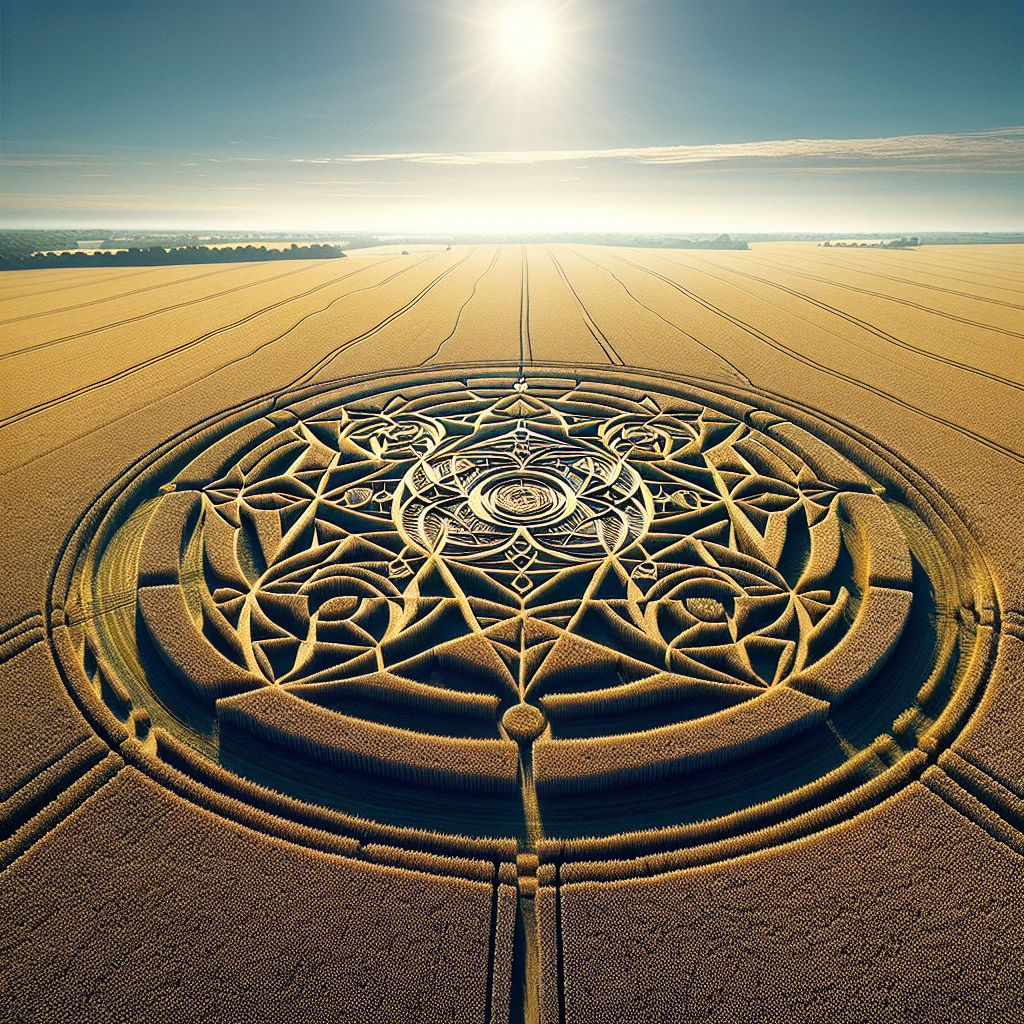
Crop circles, intricate patterns that mysteriously appear overnight in fields, have long fascinated both the public and researchers. While their origins remain a topic of debate, their impact on local communities is undeniable. These enigmatic formations often draw significant attention, leading to a variety of social, economic, and cultural effects on the areas in which they appear.
To begin with, the sudden appearance of a crop circle can transform a quiet rural area into a bustling hub of activity. Visitors, ranging from curious tourists to dedicated researchers, flock to these sites, eager to witness the phenomenon firsthand. This influx of people can provide a substantial boost to the local economy. For instance, local businesses such as cafes, restaurants, and hotels often experience increased patronage, as visitors require food, accommodation, and other services. Additionally, some enterprising locals may capitalize on the situation by offering guided tours or selling merchandise related to the crop circles, further enhancing economic benefits.
However, the presence of crop circles can also pose challenges for local communities. Farmers, whose fields are often the canvas for these formations, may face significant disruptions. The creation of a crop circle typically involves the flattening of crops, which can lead to financial losses for the farmer. Moreover, the influx of visitors can sometimes result in damage to the surrounding fields, as people trample over crops to get a closer look. This can exacerbate the financial strain on farmers, who must balance the potential benefits of increased tourism with the tangible costs to their livelihood.
In addition to economic impacts, crop circles can also influence the cultural dynamics of a community. The mystery surrounding their creation often sparks discussions and debates among locals, leading to a heightened sense of community engagement. Some residents may embrace the phenomenon, viewing it as an opportunity to showcase their area to the world. Others, however, may be more skeptical, concerned about the potential for exploitation or the disruption of their daily lives. This dichotomy can lead to a rich tapestry of opinions and discussions, fostering a unique cultural environment.
Furthermore, crop circles can also have a lasting impact on the identity of a community. Over time, a village or town that frequently experiences these formations may become known for them, attracting a steady stream of visitors even outside the peak season. This can lead to the development of a niche tourism industry, with the community becoming synonymous with the mystery and allure of crop circles. Such a transformation can have long-term implications for the community’s development and planning, as local authorities may need to consider infrastructure improvements or marketing strategies to accommodate and attract visitors.
In conclusion, while the origins of crop circles remain shrouded in mystery, their impact on local communities is both profound and multifaceted. From economic boosts and challenges to cultural shifts and identity transformations, these formations leave a lasting imprint on the areas they touch. As such, they serve as a fascinating example of how an unexplained phenomenon can ripple through a community, influencing its economy, culture, and identity in myriad ways.
The Role Of Crop Circles In Popular Culture And Media
Crop circles have long fascinated both the public and the media, serving as a rich source of intrigue and speculation. These mysterious patterns, often appearing overnight in fields of crops, have sparked numerous theories about their origins, ranging from extraterrestrial activity to elaborate human hoaxes. As a result, crop circles have carved out a significant niche in popular culture and media, influencing various forms of artistic and literary expression.
Initially, crop circles gained widespread attention in the late 20th century, particularly during the 1970s and 1980s, when reports of these enigmatic formations began to proliferate. The media played a crucial role in amplifying the phenomenon, with newspapers, television programs, and documentaries exploring the potential causes and meanings behind these intricate designs. This coverage not only fueled public curiosity but also inspired a wave of creative interpretations across different cultural mediums.
In literature, crop circles have been featured in numerous novels and short stories, often serving as a backdrop for narratives involving mystery, science fiction, or the supernatural. Authors have used these formations as a metaphor for the unknown, exploring themes of human curiosity and the quest for understanding in a complex world. The enigmatic nature of crop circles lends itself well to storytelling, providing writers with a canvas to explore the boundaries between reality and imagination.
Similarly, the film industry has capitalized on the allure of crop circles, incorporating them into various genres, from thrillers to comedies. Movies such as “Signs,” directed by M. Night Shyamalan, have used crop circles as a central plot device, weaving them into narratives that explore themes of fear, belief, and the unknown. These films often play on the tension between skepticism and wonder, reflecting the broader societal fascination with unexplained phenomena.
Moreover, crop circles have also found their way into visual arts, inspiring artists to create works that capture the beauty and complexity of these formations. The geometric precision and intricate patterns of crop circles have been replicated in paintings, sculptures, and digital art, highlighting the intersection of nature and human creativity. Artists often draw parallels between crop circles and other forms of land art, emphasizing the transient yet impactful nature of these designs.
In addition to their presence in traditional media, crop circles have also become a popular subject in digital and online platforms. Social media, blogs, and forums have provided a space for enthusiasts to share images, theories, and personal experiences related to crop circles. This digital discourse has further expanded the reach of crop circles in popular culture, allowing for a global exchange of ideas and interpretations.
Despite the ongoing debate about their origins, crop circles continue to captivate the public imagination, serving as a symbol of mystery and wonder. Their role in popular culture and media underscores the human fascination with the unknown and the desire to find meaning in seemingly inexplicable phenomena. As long as crop circles continue to appear, they will likely remain a source of inspiration and intrigue, inviting both skepticism and awe in equal measure. Through their presence in various cultural expressions, crop circles remind us of the enduring allure of the mysterious and the power of imagination in shaping our understanding of the world.
Scientific Theories Behind Crop Circle Formations
Crop circles have long fascinated both the public and the scientific community, sparking numerous theories about their origins and formation processes. While some attribute these intricate patterns to extraterrestrial activity or mysterious natural phenomena, scientific inquiry has sought to demystify crop circles by exploring more grounded explanations. One of the primary scientific theories suggests that crop circles are the result of human activity. This theory posits that individuals, often referred to as “circle makers,” use simple tools such as planks, ropes, and measuring devices to create these elaborate designs. The precision and complexity of many crop circles can be attributed to meticulous planning and execution, often under the cover of night to maintain the element of mystery. This human-centric explanation is supported by numerous confessions and demonstrations by individuals who have successfully replicated crop circle designs.
Transitioning from human involvement, another scientific theory explores the possibility of natural phenomena contributing to crop circle formations. Some researchers have proposed that atmospheric conditions, such as wind vortices or plasma vortices, could play a role in creating these patterns. Wind vortices, akin to small tornadoes, could theoretically flatten crops in circular patterns. However, this explanation struggles to account for the intricate geometric designs often observed in crop circles. Plasma vortices, on the other hand, involve ionized air particles that could potentially interact with the Earth’s magnetic field to create patterns. While intriguing, this theory lacks substantial empirical evidence and remains largely speculative.
In addition to atmospheric explanations, some scientists have considered the role of Earth-based energies in crop circle formation. This theory suggests that electromagnetic fields or other geophysical forces might influence the growth patterns of crops, leading to the formation of circles. Proponents of this idea point to anomalies in soil composition and plant growth within crop circles as potential evidence. However, critics argue that these anomalies could be the result of human interference or natural variations in soil and plant health.
Furthermore, the advent of modern technology has introduced new possibilities for understanding crop circles. Remote sensing technologies, such as satellite imagery and drones, have allowed researchers to study crop circles from above, providing valuable data on their size, shape, and distribution. These technologies have also facilitated the identification of patterns that might not be visible from the ground, offering new insights into the potential mechanisms behind their formation. Despite these advancements, the scientific community remains divided on the definitive cause of crop circles. While human activity is widely accepted as a primary factor, the allure of alternative explanations continues to captivate researchers and enthusiasts alike.
In conclusion, the scientific exploration of crop circle formations encompasses a range of theories, from human involvement to natural phenomena and geophysical forces. Each theory offers a unique perspective on the origins of these enigmatic patterns, yet none have been universally accepted as the sole explanation. As technology continues to evolve, it may provide further clarity on this intriguing subject. Until then, crop circles remain a captivating mystery, inviting ongoing investigation and debate within the scientific community.
History Of Crop Circles: From Ancient Times To Modern Mysteries
The phenomenon of crop circles has intrigued humanity for centuries, weaving a tapestry of mystery and speculation that spans from ancient times to the present day. While the modern fascination with crop circles began in the late 20th century, historical records suggest that these enigmatic formations may have roots that extend far deeper into the past. To understand the history of crop circles, it is essential to explore both the documented instances and the folklore that surrounds them.
The earliest known references to crop circles can be traced back to the 17th century, with the publication of a woodcut pamphlet in 1678 titled “The Mowing-Devil.” This document depicts a devilish figure creating patterns in a field, suggesting that the phenomenon was already part of the cultural consciousness. However, some researchers argue that the origins of crop circles may be even older, pointing to ancient texts and folklore that describe similar occurrences. For instance, certain Native American tribes have oral traditions that speak of flattened grass formations, which they attributed to supernatural forces.
As we move into the 20th century, the modern era of crop circles began to take shape. The 1970s marked a significant turning point, with a surge in reported sightings, particularly in the United Kingdom. These formations, often appearing overnight, captured the public’s imagination and sparked a wave of interest and investigation. Initially, crop circles were simple in design, typically consisting of single circles or basic geometric shapes. However, as the years progressed, the complexity and intricacy of these formations increased dramatically, leading to widespread speculation about their origins.
Theories about the creation of crop circles are as varied as the patterns themselves. Some attribute them to natural phenomena, such as wind vortices or animal activity, while others propose more unconventional explanations, including extraterrestrial involvement or secret military experiments. Despite numerous investigations, no single theory has been universally accepted, leaving the true nature of crop circles shrouded in mystery.
In the 1990s, the crop circle phenomenon reached new heights of popularity, fueled in part by media coverage and the rise of the internet. This period also saw the emergence of self-proclaimed circle makers, who admitted to creating some of the formations as elaborate hoaxes. While these admissions provided a plausible explanation for some crop circles, they did little to diminish the allure of the phenomenon. Many enthusiasts continue to believe that there is more to the story than mere human intervention.
Today, crop circles remain a subject of fascination and debate. Each summer, new formations appear in fields around the world, drawing tourists, researchers, and skeptics alike. The intricate designs, often imbued with symbolic meaning, continue to captivate those who encounter them. Whether viewed as art, a message from beyond, or simply an unsolved mystery, crop circles occupy a unique place in the cultural landscape.
In conclusion, the history of crop circles is a rich tapestry that intertwines ancient folklore with modern intrigue. From the earliest references to the sophisticated designs of today, these formations challenge our understanding of the world and invite us to ponder the unknown. As we continue to explore this enigmatic phenomenon, the allure of crop circles endures, reminding us of the enduring human fascination with the mysterious and the unexplained.
Conclusion
Crop circles are large geometric patterns that appear mysteriously in fields, primarily in cereal crops like wheat and barley. While some attribute these formations to extraterrestrial activity or other paranormal phenomena, most evidence suggests they are human-made, often created as elaborate hoaxes or art projects. The complexity and precision of some crop circles have sparked interest and debate, but scientific investigations have not found any credible evidence supporting non-human origins. Overall, crop circles remain a fascinating cultural phenomenon, blending art, mystery, and speculation.